By Cheryl Mongelard from Word Wand and Nadja Conaghan from Pulse Performance
In today’s evolving workplace, resilience is essential. Genuine resilience must be developed before it’s truly needed and requires more than a positive attitude - it calls for real strength.
So, what’s one of the best ways to develop inner resilience? It’s building capability.
It looks like this: choose one core skill that matter most to your role and decide to become highly capable. Strive to move beyond achieving to outperforming.
When you are deeply competent in a core area of your work, confidence naturally follows. And with that confidence comes a steady, grounded resilience.
So, think about the work you do. What’s one area where you could lift your game from competent to being known as the ‘go-to’ person? Maybe it’s turning complex data into clear, visual stories. Maybe it’s presenting with impact. Or perhaps it’s finding ways to leverage AI to cut out repetitive admin tasks. Whatever it is in your field, choose one, and commit the time and energy to mastering it.
Capability as a Proactive Resilience Strategy
Too often, resilience is framed as something we call upon in reaction to crisis. But as the saying goes, a crisis doesn’t build character - it reveals it. We need to stay ahead of the game and that’s where capability building matters. It’s proactive.
When you deliberately develop and master a skill, several things happen:
You get energised. Working toward mastery gives you a forward focus and a sense of purpose.
You feel great about yourself. Each improvement is a step toward becoming the professional you want to be.
You earn respect. Colleagues and management notice when you consistently lift your game.
You become the “go-to” person. Being recognised for a specific skill signals your value to the team.
You create options. Options reduce helplessness, one of the biggest drains on resilience.
You anchor yourself in capability. When things get tough, you have a skill to lean on and a proven track record to draw confidence from.
Capability and the Freedom to be Vulnerable
Here’s the surprising part: Being highly capable in one area actually makes it easier to admit where you’re not the expert. When you know your value, you can be open about your limitations without feeling diminished.
In practice, this might sound like:
“I can lead the insights analysis, but I’ll need marketing’s expertise to shape the customer message.”
This isn’t weakness; it’s an efficient, realistic understanding that no one has the time - or the need - to be an expert at everything. This honesty builds trust and fosters collaborative resilience.
What will you be known for?
Every professional should ask: What is the skill I want to be known for?
Once you identify it, invest in it deliberately. Then, share it generously - mentor others, document your process, and step up when that expertise is needed. At the same time, be willing to reach out to others for the skills you don’t have. This mutual exchange of capabilities not only builds personal resilience but strengthens team resilience as well.
Practical Steps to build Inner Resilience through Capability
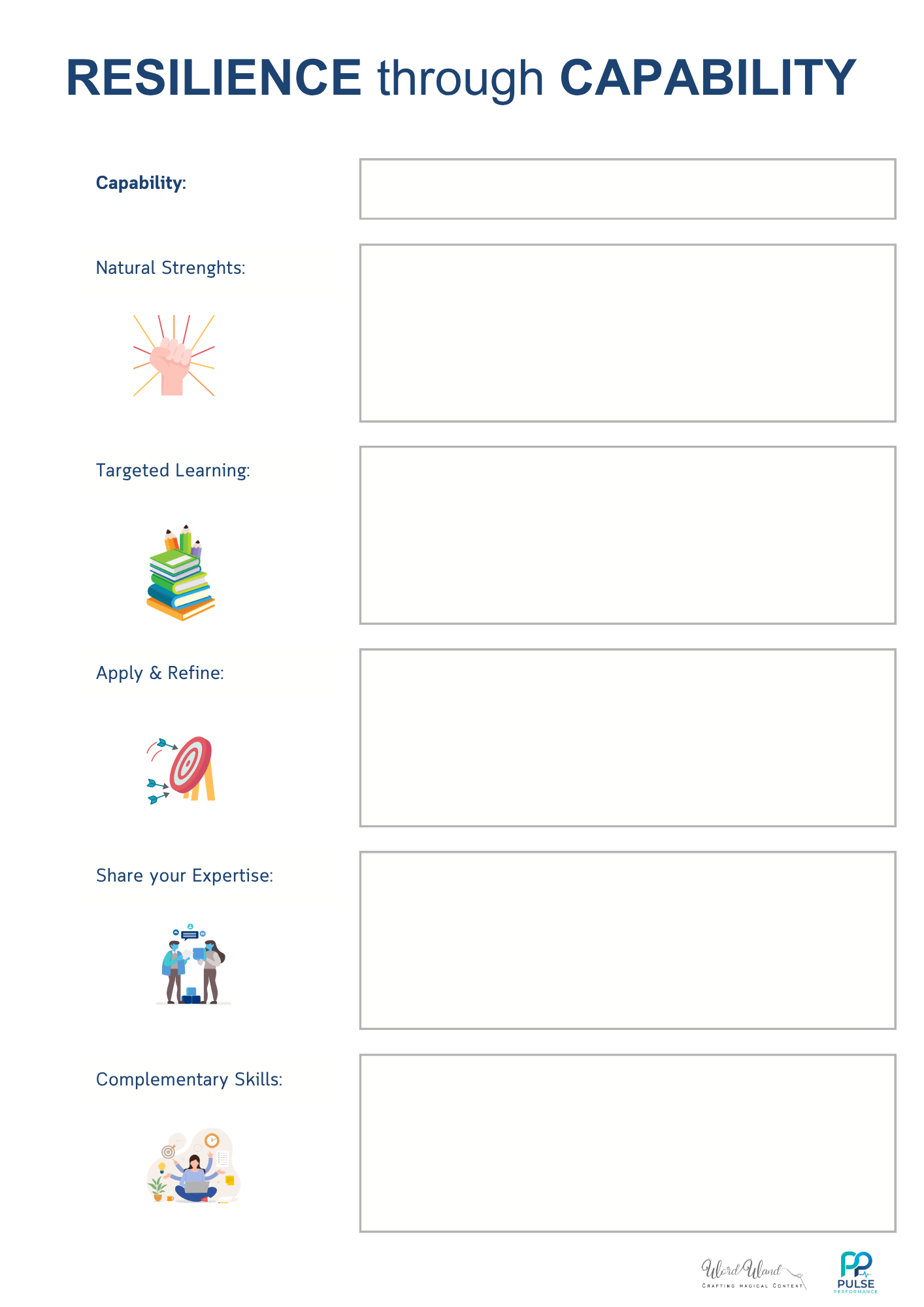
Identify your natural strengths. Reflect on tasks you enjoy and perform well in; feedback from peers can help.
Invest in targeted learning. Take courses, seek stretch assignments, or shadow experts in your chosen area.
Apply and refine. Use your skill regularly; mastery comes from repetition in varied contexts.
Share your expertise. Teaching others reinforces your own competence and deepens your team’s overall capability.
Seek complementary skills. Surround yourself with colleagues whose strengths balance yours, creating a safety net for everyone.
Commit to being Resilient through Capability Building
When you commit to capability building, you’re safeguarding your confidence and resilience. In a corporate environment where change is constant, this is one of the most valuable investments you can make in yourself.
Being known for something, aligned with your strengths, uplifts you. It anchors your professional identity. It gives you the psychological resources to face challenges head-on. And perhaps most importantly, it creates a ripple effect—when you model capability and confidence, you inspire others to do the same.
So, the question becomes: What will you choose to excel in? And once you’ve built that capability, how will you use it to strengthen not only yourself, but the people around you?
FINAL THOUGHTS
Capability - i.e., being good at something - is so important for you self-value, self-worth, confidence and ultimately your inner resilience. In other words, you don’t need to only focus on “resilience strategies” to become more resilient. Building capability and becoming great at something can make you more resilient. The building capability strategies, described by Cheryl, teaches us something about resilience itself:
Identify your natural strengths: Using your strengths to problem solve and increase your mental health and confidence
Invest in targeted learning: Invest in yourself and learn something new that benefits you
Apply and refine: Have the confidence to act and overcoming setbacks and challenges; having discipline, tenacity and determination
Share your expertise: Teaching others is the highest form of expertise; it creates connection and is a powerful source of meaning and self-worth
Seek complementary skills: Building a strong support system
Feeling good and confident in your role and be the “go-to-person” and a role-model to others give you confidence in yourself, increases your self-worth, tenacity, determination and the ability to overcome challenges and less vulnerable to setbacks - all things that make you resilient.
We developed a tool for you to support you in building capability to become more resilient.